
Less manual work. More clarity.
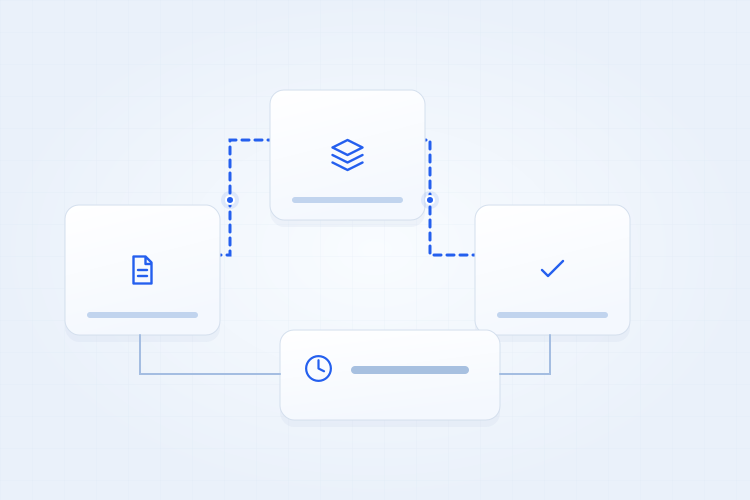
Work slows down when people have to copy data manually or search through messages to find a task's status. We help map the process: who receives a task, what information they need, what happens next and where a human decision is required.
What the solution includes
- Process assessment to identify repetitive tasks and bottlenecks.
- Request routing, document approvals, notifications and status tracking.
- Data exchange between existing applications and business management systems.
- AI for document processing and suggestions where it benefits the workflow.
From the first task to launch
We choose one process, map routine cases and exceptions, and put the workflow into practice. We test it with employees and gradually connect the remaining stages, keeping operating rules and responsibilities clear.
Questions and answers
Which process should we start with?
Choose a repeatable, well-understood process with an owner and available data. A limited scope is useful, such as passing a request between departments or reconciling information between two systems.
Do we need to replace every company system?
Not necessarily. Configuring data exchange or changing one part of a process may be enough. Whether existing tools can be retained depends on their interfaces, data quality and operational constraints.
What determines timelines and costs?
Costs depend on the processes involved, data condition, number of integrations and deployment requirements. After assessment, we agree on stages, acceptance criteria and an estimate. Licences and hardware are priced separately.
What do we need to provide to get started?
A description of the task, process participants and existing systems. Data access is agreed separately; anonymised examples can be used in the first stage.
How do handover and support work?
We deliver the agreed documentation, provide training and define operating procedures. Support hours, response times and SLA scope are specified in the contract.